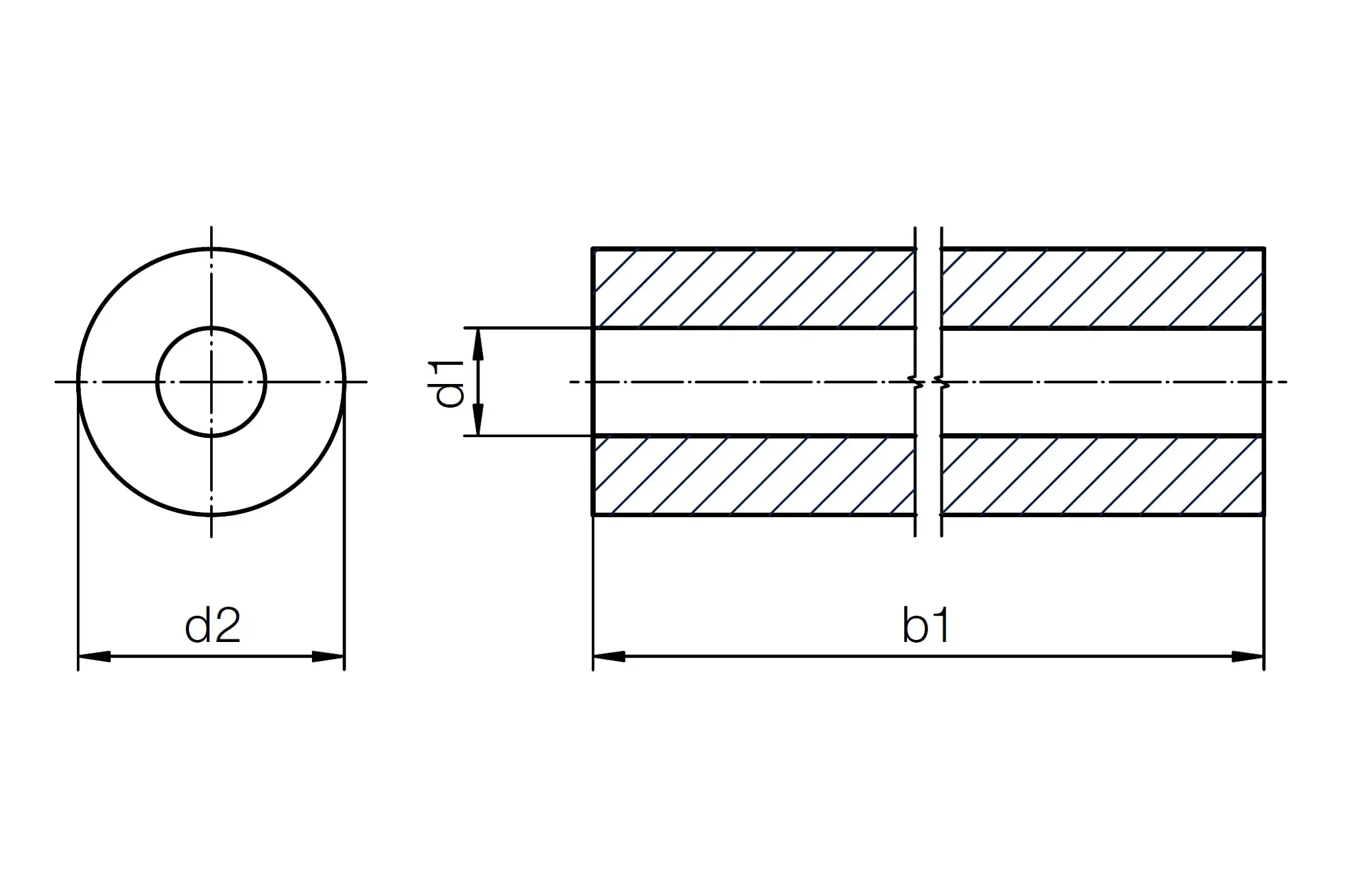
A blue, low-cost food-contact belt roller for the wide middle of the FDA-compliant market — light-duty applications where chemical resistance and food compliance matter, but the mechanical demands are modest. A160 is the budget option of the food-contact roller family: same -58°F to 194°F (-50°C to 90°C) continuous service window as A180, but with a lower density (1.0 g/cm³), softer feel (Shore-D 60), and lower mechanical capability (max recommended surface pressure 2,175 psi versus A180's 4,061 psi). What you gain in return is broad chemical resistance — including resistance to strong acids and strong bases — and a lower cost on installations where the load and speed requirements are well-defined and well below the limits. The blue color provides visual contamination detection against most food products.
When to use it: Cost-driven food-contact applications with modest load and speed requirements, environments with frequent chemical exposure (cleaning agents, acids, bases) where chemical resistance is the priority, and high-volume installations where the part cost adds up across many roller positions.
When not to use it: When mechanical load or belt tension exceeds A160's lower surface-pressure ceiling (use A180 for standard food-contact loads or A250 for higher loads and sterilization-cycle service), when the application is non-food-contact and a less expensive general-purpose option would do (use P210), or when high temperatures or transport speeds dominate (use H1).
Application areas: Cost-sensitive food and beverage conveying, light-duty FDA-compliant materials handling, chemical and cleaning-agent-heavy washdown environments, light-load food packaging lines, and high-roller-count installations where unit cost has a meaningful impact on total bill of materials.